Glass half full
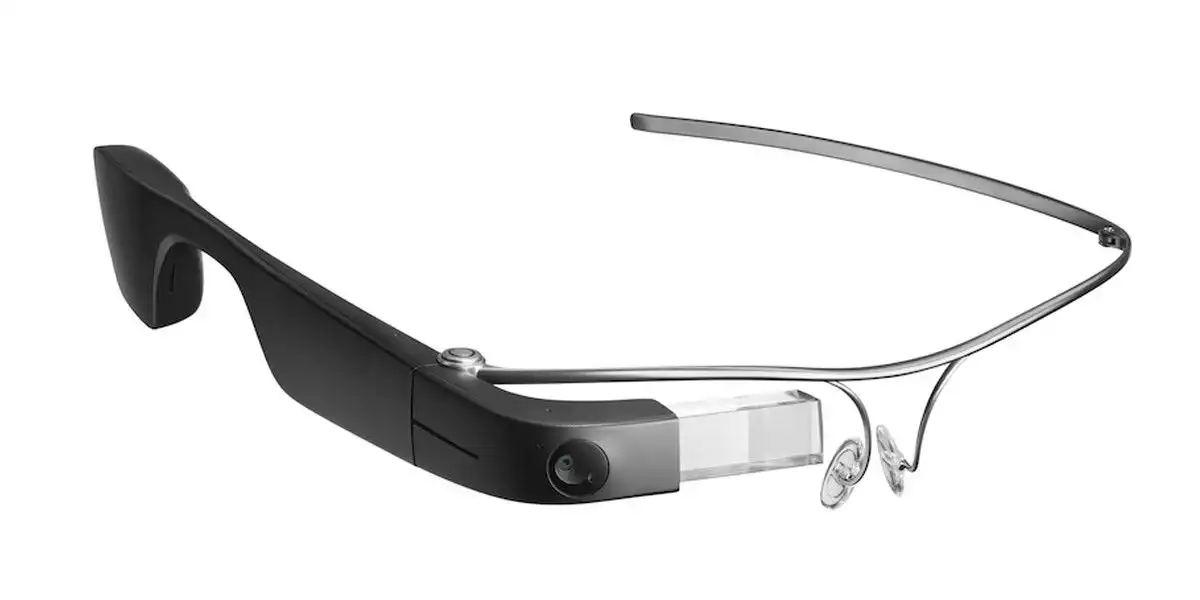
Google Glass is a failure. That isn’t exactly news, but it is now official: The company this week finally discontinued the business version of the product, which itself replaced the deeply unpopular consumer devices whose wearers were subjected to mockery and occasional physical violence, and coined the term “Glass-hole.” An inglorious tale has come to an end, and not a moment too soon.
Then again, the timing is notable and a little surprising because it comes mere months before Apple is expected to make its own entry into the world of face-mounted computing with a mixed-reality headset. (Skeptics may point out that we’ve been waiting for the headset for years and insist that they will believe it when they see it, but the chorus of leaks and rumors is becoming deafening.) This suggests that one of these two tech giants has completely misread the market: Google thinks it’s the right time to get out of augmented reality–or its own vague approximation of it, as I’ll explain in a bit–and Apple thinks it’s the right time to get in. They can’t both be right.
Google’s negative experiences in this field can be salutary for Apple, for which this will be a hugely significant launch with the potential to usher in a wide-ranging ecosystem that one day rivals the success of the iPhone, or to tarnish Tim Cook’s legacy forever. Apple needs to look at the things Google got wrong, and the obstacles it was unable to overcome, and find a different path… or simply hope that the market has changed enough that the same methods will now be more successful. That’s where the importance of timing comes in.
The single biggest problem facing both companies, Google then and Apple now, is how different a face-mounted device is from the tech products we spend most of our time using. The introduction of tablets and smartwatches essentially reproduced the experience of the smartphone on a larger or smaller screen and didn’t require a paradigm shift in the user’s relationship with the device. It was still a smallish glowing rectangle concealed somewhere about your person which you took out and looked at when it required attention. But a pair of smart glasses or particularly a mixed-reality headset demands a relationship with technology, and with the world around you, that is unprecedented in most users’ lives.
Google Glass was an “in your face” object in more ways than one and managed to make its users look like hipster showoffs, mad futurists, and Orwellian informants at the same time. And this was a comparatively discreet product that at least somewhat mimicked the appearance of a regular pair of spectacles. How much more annoying will passers-by find a mixed-reality device that covers your eyes and much of your head? How long will it be before a Reality One user gets openly mocked?
The hope, here, is that the world has moved on and that Google Glass was considered especially provoking because it was ostentatiously new. Apple can benefit in this regard from Google’s unselfish work getting the world used to smart glasses, which no longer seem quite as space-age as they did in 2013. Furthermore, when a product’s user base hits a critical mass it no longer seems odd. Apple will be hoping to normalize its headset through a combination of weight of sales and marketing know-how. Plenty of people thought “iPad” was a hilariously bad brand name until all of their friends suddenly owned one.
The key here, and the way to avoid Google’s mistakes, will be both to deliver the benefits of AR and to make the public know what those benefits are. Because, as my colleague Jason Cross points out, Google Glass wasn’t really an AR product at all. Rather it was a fancy heads-up display with no ability to interact with real-world objects. And so its users were accepting the public shame of wearing an AR device without seeing such a product’s benefits. It was all pain–literally, in some cases—and no gain. It’s perhaps no coincidence that Microsoft’s HoloLens, which really is an AR device, is still going strong, or at least still going.
Apple won’t, I suspect, be happy with a niche role in the corporate sector like that carved out by HoloLens, or in medical or educational settings, but that still leaves us without a clear understanding of what Reality One’s killer consumer app will be. Bearing in mind that it will also offer virtual reality features, one possibility is home gaming, but there remains the suspicion that Apple doesn’t really understand the gaming market, and that VR gamers will have far better and likely cheaper options elsewhere. It could also give Apple its way into the metaverse, as nauseating as that word is to even type.
But the most promising point is this: Thanks to its many talented app developers, Apple doesn’t necessarily have to decide what the product is for. It just has to put the hardware out there and see where the community takes it. Maybe it will be used primarliy for gaming, maybe social or educational, or maybe users will abandon the outside world entirely and take refuge in an imagined universe free of poverty and hate. If you build it–and build it properly–they will come.