You’ve already deleted every app you don’t think you need, and there’s still not enough space on your iPhone. So you open Settings, tap General, then iPhone Storage, and, sure enough, your iPhone is full. Worst of all, a huge chunk of it is just listed as Other (renamed System Data in iOS 15). What’s that supposed to mean? How do you get rid of it? The Other/System Data storage sections are mysterious and confusing, and there’s no one answer that works for everyone, but hopefully, this guide will help you deal with this problem.
How to view your iPhone storage
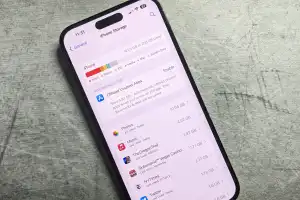
To see how much storage all your apps and data are taking up on your iPhone’s storage, open the Settings app, select General, then iPhone Storage. At the top, you’ll see a bar graph showing your total iPhone storage and which types of data are filling it up. Beneath that you’ll find a list of applications on your phone and how much room they take up, both for the app itself and its stored data.
It may take several seconds for your iPhone to show the graph, as it takes time to scan and analyze its storage. Even after the chart first appears, you’ll want to wait several seconds more for it to stabilize, as the app list and storage sizes can change while your phone completes its analysis.
What is Other/System Data storage, anyway?
Your iPhone Storage menu will divide that bar up top into familiar categories like Apps, Media, Photos, and Mail, but also an Other/System Data category that is sometimes very large. It’s common for System Data to be in the 5GB to 20GB range, but if it’s way over 20GB, it has probably grown out of control. You can scroll all the way down to the bottom of the app list where you will see iOS, which are the files required by the system and are usually around 10GB, and System Data, which are files other than apps and downloads that are collected by iOS. Tap on System Data to see how much space it is taking up.
The Other/System Data category is big and varied because it’s a real catch-all category. It’s comprised of system caches, logs, Siri voices (if you’ve downloaded more than one), updates, and so much more. One of the biggest culprits for Other/System Data growing out of hand is streaming lots of music and video. When you download video or music from the iTunes Store, TV app, or Music app, it’s indexed as Media. But streams have caches used to ensure smooth playback, and those are categorized as Other/System Data.
Safari’s caches can start to grow pretty large, too. And if you send tons of texts with images or video, the caches for that can start to fill up a lot of space. Your iPhone is supposed to manage these caches to keep your storage from becoming completely full, but it doesn’t always do a great job.
Finally, go back to iPhone Storage and look at the apps list. Most of the apps store data that is categorized as Apps, but some will keep caches that are categorized as Other/Sytem Data. If, say, the Podcasts app is taking up a couple of gigabytes of space, it’s likely mostly cached data. Deleting the app and re-downloading it might put a dent in the Other/Ststem Data category.
The nuclear option: Backup and Reset your iPhone
You can go through your iPhone trying to delete every little cache that could grow the size of Other/System Data storage, but if you really want to make it as small as possible, you need to back up your phone and reset it. This can take a little while. The best way to do this is to use your Mac or PC.