iPhone 14 vs iPhone 14 Pro: Screen sizes
For the first year ever, both the standard iPhone 14 and the iPhone 14 Pro are available in the same screen sizes. Regardless of which family you pick, you have your choice between a 6.1-inch or 6.7-inch screen. This is a major difference compared to the past two years, when the top-tier “Pro Max” was the only choice for those who wanted the largest 6.7-inch screen.
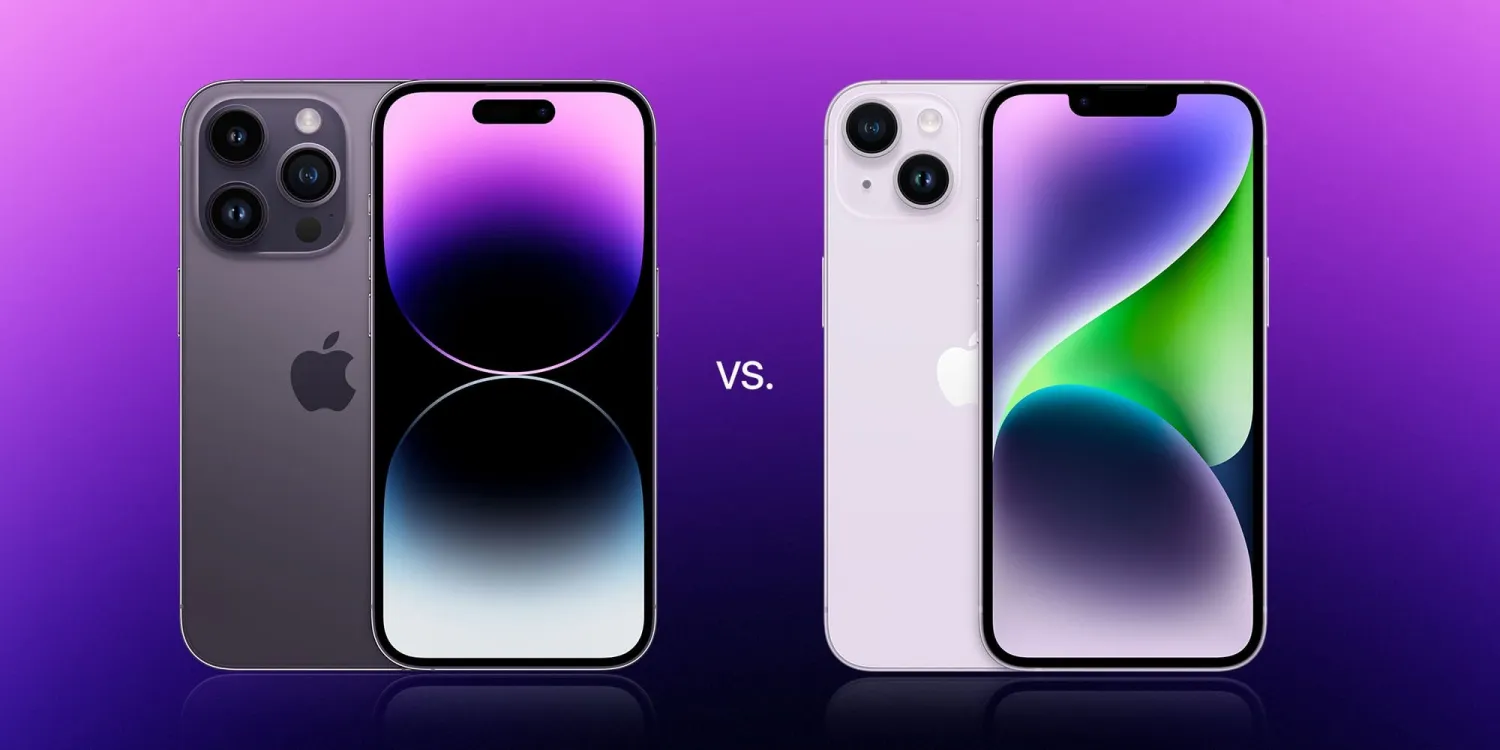
But with that in mind, there are some big differences in terms of the screen technology and features. Namely, the iPhone 14 Pro and iPhone 14 Pro Max offer ProMotion display technology for smoother animations, the new Digital Island that replaces the notch, and the first-ever Always-On display.
The iPhone 14 Pro’s Always-On display enables the screen to show you your lock screen widgets, the time, and your wallpaper at all times. This is the first time Apple has ever implemented an Always-On display for the iPhone.
Meanwhile, the Digital Island brings a new level of interactivity in replacement of the notch. You can tap and hold to find more options and controls. The Dynamic Island can show things like album art for content in the Music app, controls for FaceTime, specific background activities, and more. The new Live Activities feature coming iOS 16 also integrates with the Dynamic Island, meaning you can see live notifications directly in the new screen area.
While those are the bigger differences between the displays, there are some other technical details as well. Here’s the full breakdown of the display technology inside the iPhone 14 vs iPhone 14 Pro.
Size and design
There are some notable differences in the design and dimensions of the iPhone 14 and iPhone 14 Pro lineups, even though they share screen sizes. There are also differences between the materials used for each model, the weight, and more.
As you can see in the chart below, the rough dimensions of the respective iPhone 14 and iPhone 14 Pro models are the same. The biggest difference is the weight, with the iPhone 14 Pro and iPhone 14 Pro Max weighing noticeably more than the non-Pro counterparts. This is due to the heavier stainless steel edges, the larger camera modules (more on that in a bit), and the larger batteries.