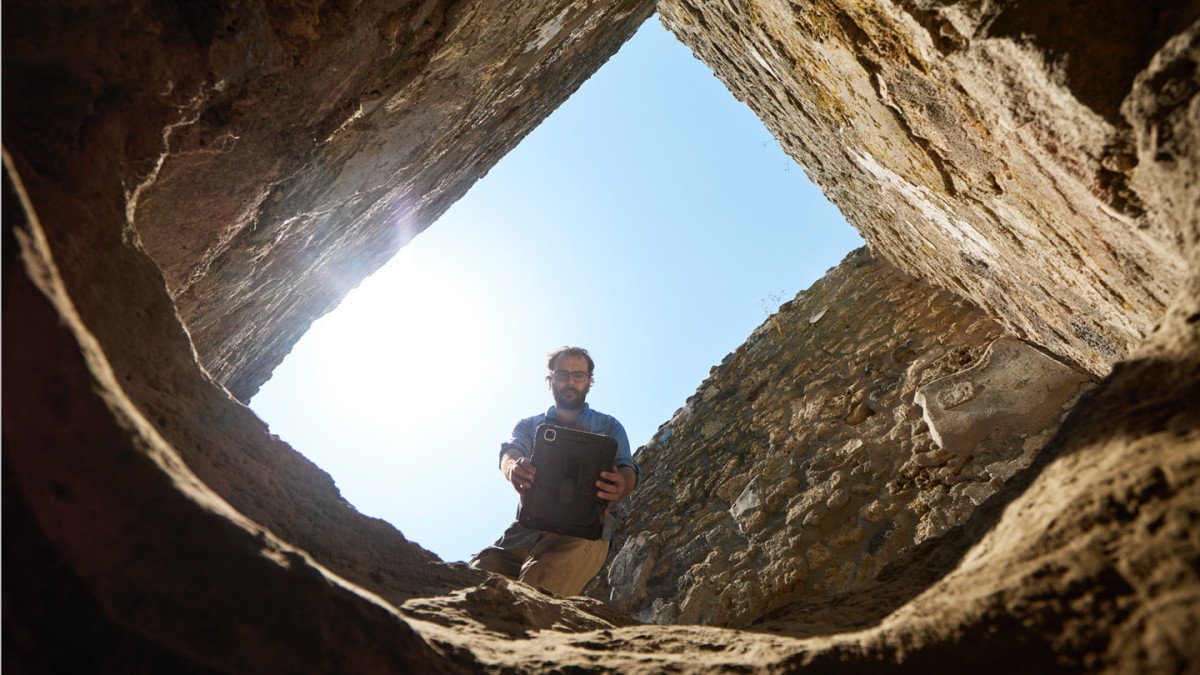
iPad Pro is revolutionizing how archaeologists preserve the ancient history of Pompeii
The day before, a trove of artifacts was discovered inside a pit in an ancient Roman kitchen, and Tulane University professor Dr. Allison Emmerson, who is leading the dig, believes the team has not yet reached the bottom and all of its contents. Each new discovery provides a clue to unlocking the story behind the site and the people who used it
iPhone News
27-09-2022 12:56
384Hit
Amid the tools used by archaeologists for centuries — trowels, buckets, brushes, and pickaxes — there’s a new piece of equipment: iPad Pro.
“iPad is the perfect archaeology machine,” says Dr. Emmerson, who was part of the team that pioneered its use to record data on archaeological digs in 2010. She credits iPad with revolutionizing the field.
This summer, Dr. Emmerson — whose work focuses on ancient Roman communities that have largely been excluded from study, such as women, the poor, and the enslaved — has made iPad Pro the center of her team’s workflow. She believes it will once again reshape the field, thanks to capabilities like enhanced processing speed and battery life, the LiDAR Scanner, and the versatility of Apple Pencil.
“Archaeological excavation is a destructive process — once a location has been dug, that work can never be repeated — so our most essential concern is thorough recording of all relevant data so that future researchers can ‘reconstruct the site,’” says Emmerson. “iPad Pro allows us to collect data faster, more accurately, and more securely than any other tool, and has the processing power we need to aggregate that information and present it in a way no one has before.”
Mount Vesuvius erupted in the fall of 79 C.E. (Common Era, also known as A.D.), burying the city of Pompeii in volcanic material. Seventeen years earlier, a major earthquake severely damaged the city, and some archaeologists believe that in between those two events, Pompeii was a city in decline.
For this year’s five-week dig, called the Tulane University Pompeii I.14 Project after the building’s location on the city grid, Dr. Emmerson brought together archaeologists and students from schools on both sides of the Atlantic to excavate a commercial building believed to be a restaurant dating to the second or third century B.C.E. (before the Common Era, also known as B.C.).
The group also includes a tech team co-led by Dr. Alex Elvis Badillo, a digital archaeologist Dr. Emmerson has been working with for the last year to pioneer new techniques for recording and publishing archaeological findings.