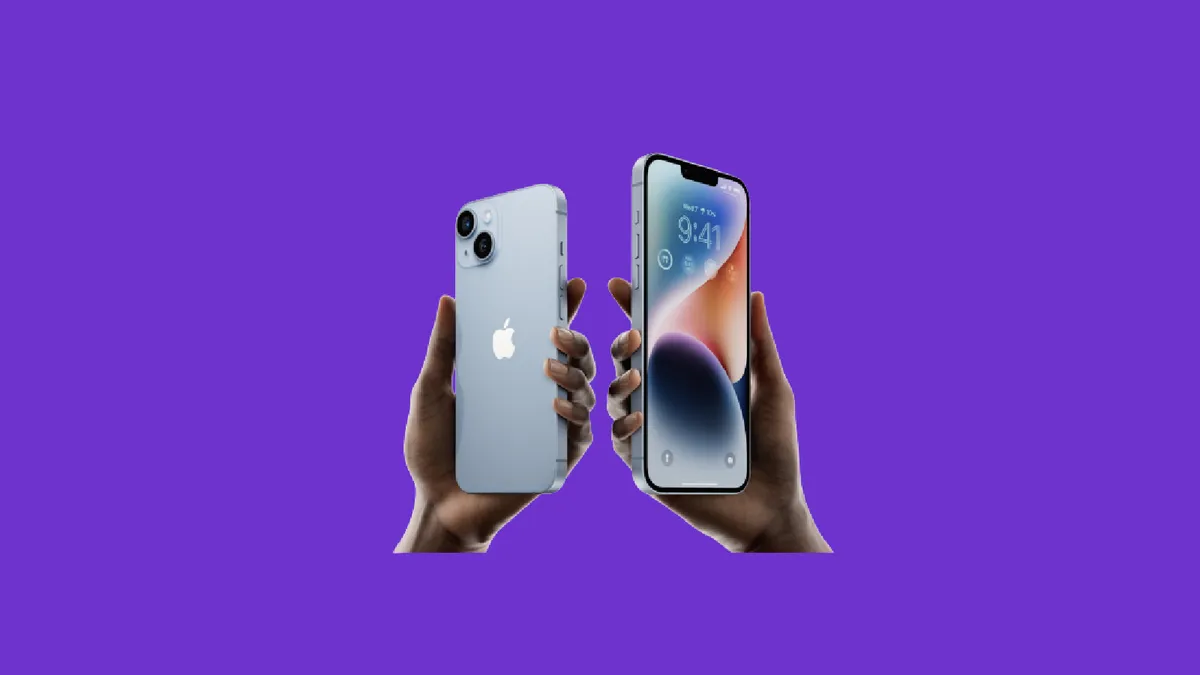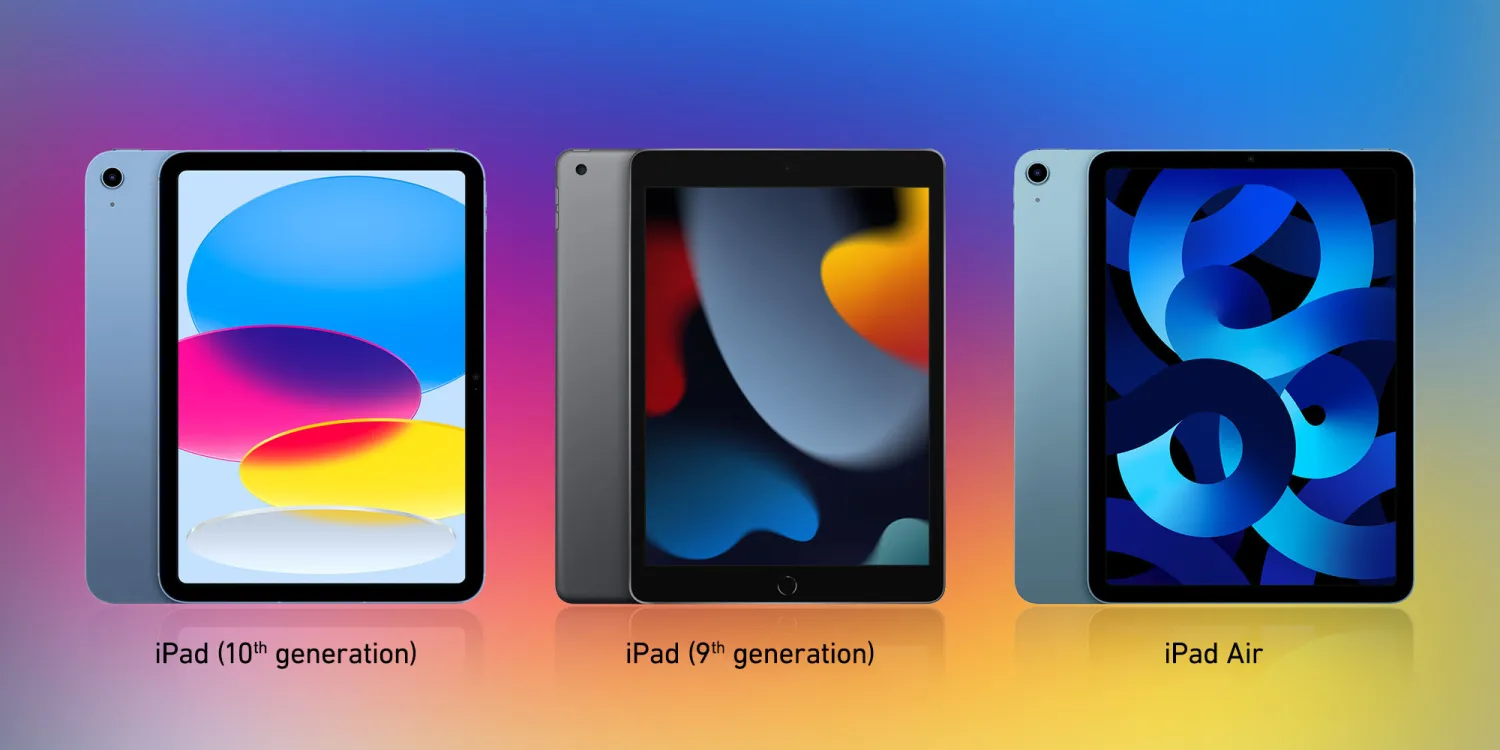
However, the iPad 10 with Apple’s modern slim-bezel design and a price below the iPad Air with many of the same features, it’s likely to pull customers away from both the iPad Pro and Air.
Related:
- M2 iPad Pro vs iPad Air: What do you gain or give up?
- M2 iPad Pro vs M1 iPad Pro: What’s changed?
Let’s dig into what you get with the iPad 10 vs 9 vs iPad Air. For all the charts below, the iPad 10 is in the middle row with iPad 9 on the left and iPad Air on the right.
Table Of Contents
- iPad 10 vs 9 vs iPad Air
Performance
In its announcement, Apple focused on the improvement from the iPad 9 to 10. With the upgrade from the A13 to A14 Bionic, the company touts 20% faster CPU speed and an 80% faster neural engine
Meanwhile, the 2022 iPad Air is powered by the M1 chip. That includes a more powerful eight-core CPU and eight-core GPU. But, unless you’re running your iPad hard with pro-level workflows like video editing, graphic design, etc., you probably don’t need or might not even notice the M1 chip upgrade
| iPad 9 | iPad 10 | 2022 iPad Air | |
| Chip | A13 Bionic | A14 Bionic | M1 |
| CPU cores | 6 | 6 | 8 |
| GPU cores | 4 | 4 | 8 |
| Neural engine cores | 8 | 16 | 16 |
| Storage | 64 or 256GB | 64 or 256GB | 64 or 256GB |
| RAM | 3GB | 4GB | 8GB |
| USB-C | ❌ | ✅ | ✅ |
| Cellular | 4G | 5G | 5G |
Display
iPad 10 gets almost the same display as the more expensive iPad Air. That’s a 10.9″ Liquid Retina panel with a 2360 x 1640 resolution. Other specs include 500 nits brightness, True Tone, and slim bezels.
The three main features you don’t get with iPad 10 found on iPad Air are P3 wide color, anti-reflective coating, and a laminated display.
But for most people, the iPad 10’s upgraded display will be great