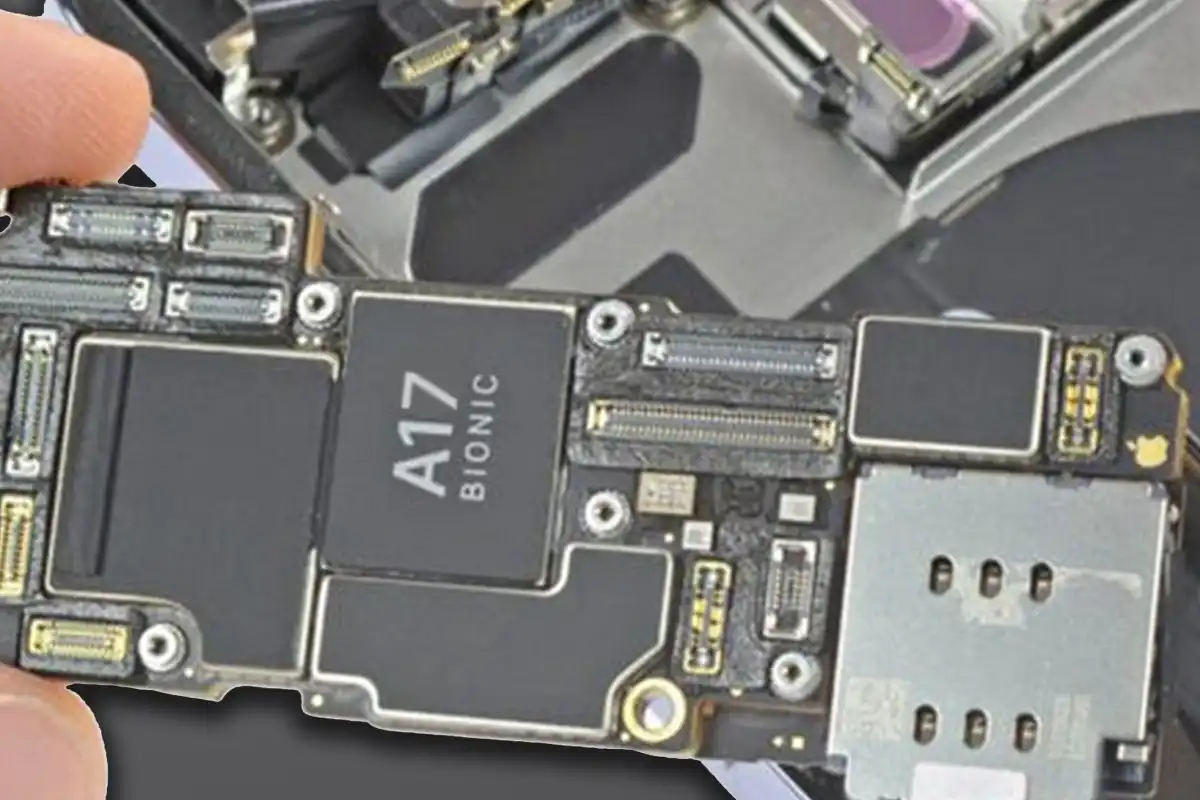
By looking at the past decade of in-house Apple-designed A-series chips, together with what we know about the manufacturing technology available and the company’s direction and goals, we can piece together a pretty good educated guess about what to expect from the A17.
Just for iPhone 15 Pro (or Ultra)
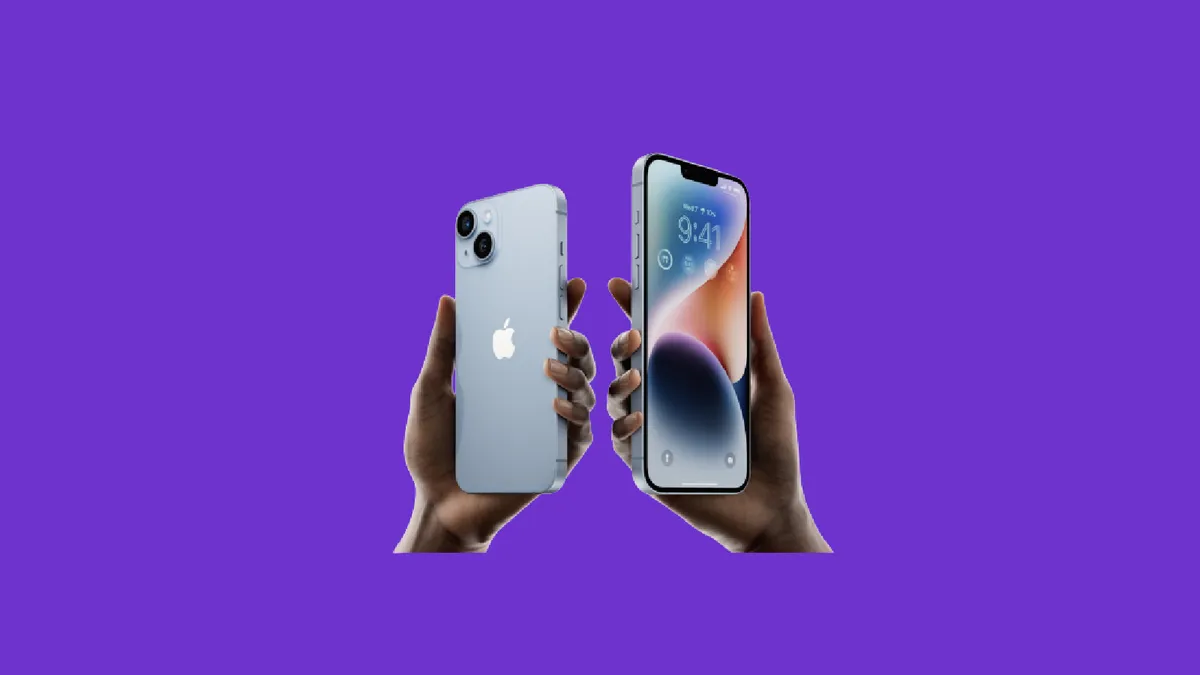
Last year, the A16 was exclusive to the iPhone 14 Pro, while the standard iPhone 14 used the A15. We expect a repeat of that pattern this year, where the new A17 is exclusive to the iPhone 15 Pro and iPhone 15 Pro Max (or iPhone 15 Ultra, if the rumors are true) and the standard iPhone 15 gets the A16 used in the iPhone 14 Pro models.
Is this the way forward for Apple for the foreseeable future? With smartphone features and quality reaching something of a plateau and Apple’s phone chips running circles around most Android phones, there’s little reason to change. For Apple, it reduces costs and helps create a bigger differentiator between regular and Pro models, which tends to push customers toward the more expensive iPhone.
Apple’s first 3nm chip
The A14, A15, and A16 were all made using a 5nm manufacturing process from TSMC. Granted, that process has evolved over time, producing chips that are denser and have improved power efficiency, but there’s nothing quite like the leap to the next major process node. And that’s what we’re almost certainly going to get with the A17—the first large-scale consumer chip made with TSMC’s 3nm process.
I wrote at length about the advantage Apple will enjoy with a 3nm process, and the big one is more density–while the A16 was about 16 billion transistors, we can expect well over 20 billion for the A17, perhaps as high as about 24 billion.
The 3nm process offers more power efficiency, with a comparable chip at a comparable speed, but Apple isn’t going to make a comparable chip at a comparable speed. Maximum power draw will be limited by battery size, thermal dissipation, and other factors, and I don’t think we can expect a massive shift in battery life from the move to 3nm alone. At least, not for active use under full power–not only will the chip likely consume nearly as much power in that scenario, but the display and radios also contribute so much to the power drain.
Where we may see some improvement is in standby mode, which may get noticeably better with the move to the 3nm process.
CPU performance and features
ARM launched its v9 architecture in 2021, and we thought the A16 might be Apple’s first chip to support the new v9 instruction set. Instead, it supports ARM v8.6 with plenty of Apple’s own extensions. This year, with a higher transistor budget, it seems ARM v9 support is likely.
What advantages do the ARM v9 instruction set and architecture provide? Apple designs its own CPU cores, and many of the performance benefits promised by the v9 architecture are already realized in Apple’s designs and ARM extensions. Indeed, the Snapdragon 8 Gen 1 was one of the first high-end smartphone CPUs with ARM’s Cortex-X2 core with support for ARM v9, and Apple’s A15 outperformed it by a wide margin.
You’ll see a lot of claims that ARM v9 offers a 30 percent performance improvement over ARM v8, but that’s for ARM’s own core designs, and doesn’t take into account the use of custom extensions. Apple’s in a whole other league here–we probably won’t see 30 percent faster CPU performance from the A17.
Apple’s new CPU cores for the A17 will almost certainly be faster, but not necessarily because of the shift to ARM v9. CPU core performance is influenced by the instruction set, branch prediction, instruction decode, execution units, cache structure and size, clock speeds, and many other factors.
As far as general core count goes, there doesn’t seem to be much reason for Apple to move beyond the 4 efficiency cores and 2 performance cores that have been with us since the A11 Bionic. We just expect a good 15 percent more performance out of them.
Simply projecting the last several years of CPU performance improvement, we can probably expect a Geekbench 5 single-core score between 2,100 and 2,200, and a multi-core score of just over 6,000. Geekbench 6 was just released and we don’t have years of benchmark data to create an accurate projection, but a single-core score of over 2,800 and a multi-core score of 7,300 or more seems justifiable. A recent leak that claims a single-core score of 3019 and a multi-core score of 7,860 isn’t out of the realm of possibility—especially since we saw a larger-than-expected leap when Apple moved from a 7nm process to a 5nm one with the A14—but numbers this early are likely completely made up.
In case you’re wondering how that stacks up to other processors, that would give the A17 a single-core score similar to the latest Ryzen high-end desktop CPUs and 13th-gen Core i7 Intel processors, but a far lower multi-core score (which makes sense, as we’re talking about only two high-performance cores versus 12 or more in those desktop processors). The A16 already soundly beats Android phones with the top-tier Snapdragon 8 Gen 2, and the A17 should only widen the gap.
If we’ve learned anything over the years, it’s just how steady the performance improvement is for Apple’s CPUs. Single- and multi-core performance goes up at a nearly straight line, no matter which years have big architectural changes or manufacturing process leaps. It’s very reasonable to expect a similar improvement this year.