Life was pretty different back in September 2012. I was an angsty 15-year-old and I hadn’t started writing for 9to5Mac yet. (That would happen the following summer.) Still, the 9to5Mac team was on the case with full coverage of the iPhone 5’s launch and the controversial switch to Lightning.
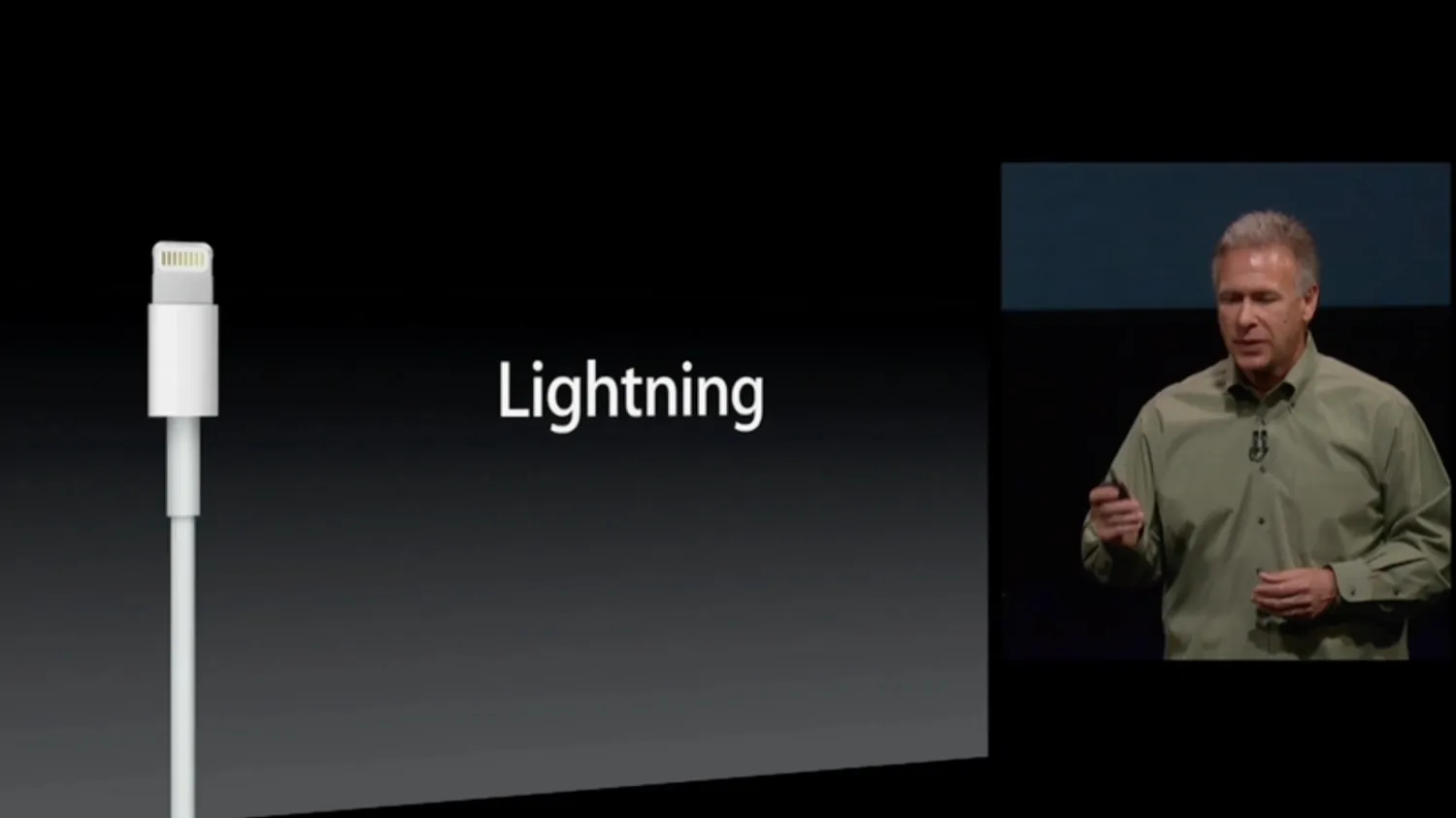
When Schiller introduced the Lightning connector, he touted four major benefits compared to the 30-pin connector:
- All digital, 8-signal design
- Adaptive interface
- Improved durability
- Reversible, easier to use
- 80% smaller
Apple knew that it would face blowback for changing the iPhone’s connector type, but it tried its best to focus on the positives. During the event, Schiller explained the transition like this:
The iPhone from its start has used the iPod 30-pin connector, which we launched originally in 2003, and it served us well for almost a decade. But so much has changed since we first created that 30-pin connector.
So many of the things we used to do over the wire, we now do wirelessly. We use Bluetooth now to connect to speakers and headphones and car systems. We use Wi-Fi … to AirPlay to our TV or to our stereo. We can do Wi-Fi syncing to iTunes now. And best of all, with iCloud, we can download all our content wirelessly and even back up to the cloud.
So a lot has changed, and it‘s time for the connector to evolve. And that’s just what we’ve done.
Our new connector is called Lightning. So now we have Thunderbolt and Lightning in our connector strategy. This connector is a modern connector for the next decade. All digital, eight-signal design. It’s adaptive to what those signals need to be for the different accessories you might plug into.
It’s more durable and much easier to use because now you can plug it in either direction. It doesn’t matter. And best of all for the engineering team to make a product like this, it’s 80% smaller. That’s a huge difference in the world’s thinnest smartphone. We’re working with accessory makers to have them integrate lightning connectors into products you may choose to buy, for example, this holiday season. We have great partners working with us, partners like Bose, JBL, Bowers and Wilkins, Bang and Olufsen, and many more.
Schiller also focused on the different accessories and dongles Apple would go on to sell to help ease the transition from 30-in to Lightning.
But what about all the devices and speakers and connectors you have now that you already have that use a 30-pin connector? Well, we’re creating a bunch of accessories to help you with that.
This is a 30-pin to lightning adapter. And it works just like you’d expect. You can plug your 30-pin cable into it, and it into your iPhone 5. So a typical example for this might be in your car where you have an iPod connection kit. You just plug in this adapter. You can just leave it there. Now, whenever you jump in your car, plug in [your] iPhone 5, and you can charge and listen to your music as you go.
So that’s the new Lightning Connector.