The significant challenge of meaningfully replicating natural sight, particularly if the image then needs to be magnified, relies heavily on deploying highly advanced cameras and displays – the likes of which have simply not been available in either bespoke low vision systems or consumer virtual reality and augmented reality headsets to date.
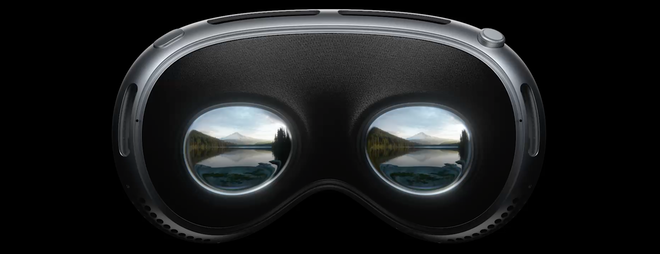
This could well be about to change when Apple’s Vision Pro headset, unveiled in June, officially launches in the U.S. in early 2024. Though the price point of the $3,499 mixed reality spatial computer doesn’t exactly scream out “accessibility” the tech specs are certainly tantalizing for anyone with an interest in camera vision in relation to low vision rehabilitation…
[A]s of summer 2023, it would appear that there is a fly in the ointment. Apple has confirmed that, at launch, it will be restricting access to the Vision Pro’s impressive camera array for third-party app developers… The reason behind the camera restrictions is a simple but important one – namely privacy… [A]dvanced technologies such as AI and camera vision hold great promise for transforming the lives of marginalized populations but, at the same time, wider society hasn’t quite made its mind up about the use or potential abuse of technologically-bestowed superpowers.
Being able to zoom in on or even record a wrinkle on the face of somebody standing across the street is one such superpower. Nonetheless, it’s worth noting that the very same technology would enable a visually impaired parent to see the expression on their child’s face when they attend their first school play.