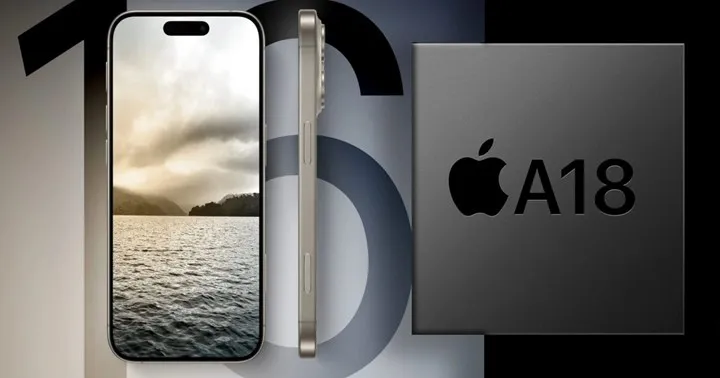
As the tech world eagerly awaits the launch of Apple's iPhone 16 series later this year, new details have emerged about the A18 Pro chip set to power the upcoming smartphones. Despite a design that remains largely unchanged from its predecessor, the A18 Pro chip is expected to deliver considerable performance enhancements.
In a strategic move, Apple has traditionally differentiated its standard iPhone models from the Pro versions by equipping them with different generations of processors. However, recent reports suggest a shift from this practice, with both the iPhone 16 and 16 Plus, as well as the Pro and Pro Max models, rumored to be introduced with the A18 Bionic and A18 Pro chips, respectively.
Although initial details were scarce, focusing mainly on the A18 Pro's six-core GPU, recent updates have shed light on the CPU composition, revealing no generational change from the A17 Pro. The A18 and A18 Pro are both expected to feature a six-core CPU configuration, comprising two performance cores and four efficiency cores. This raises questions about the extent of improvement over the previous generation.
Nevertheless, early benchmarks for the A18 Pro are promising, showing up to a 28% performance increase over the A17 Pro. This is noteworthy, especially when considering Qualcomm's Snapdragon 8 Gen 3 to Gen 4 is anticipated to offer a 46% performance boost. Apple's focus on balancing performance with efficiency could set a new standard in the industry. Further enhancements, such as a larger die size, increased cache, and potentially an expanded Neural Engine, are also on the horizon.
This development indicates that while the architectural design of the A18 Pro may remain familiar, the performance leap it offers could be substantial, keeping Apple at the forefront of the competitive smartphone market. As more details emerge, the tech community remains keen to see how these advancements will translate into the user experience of the iPhone 16 series.