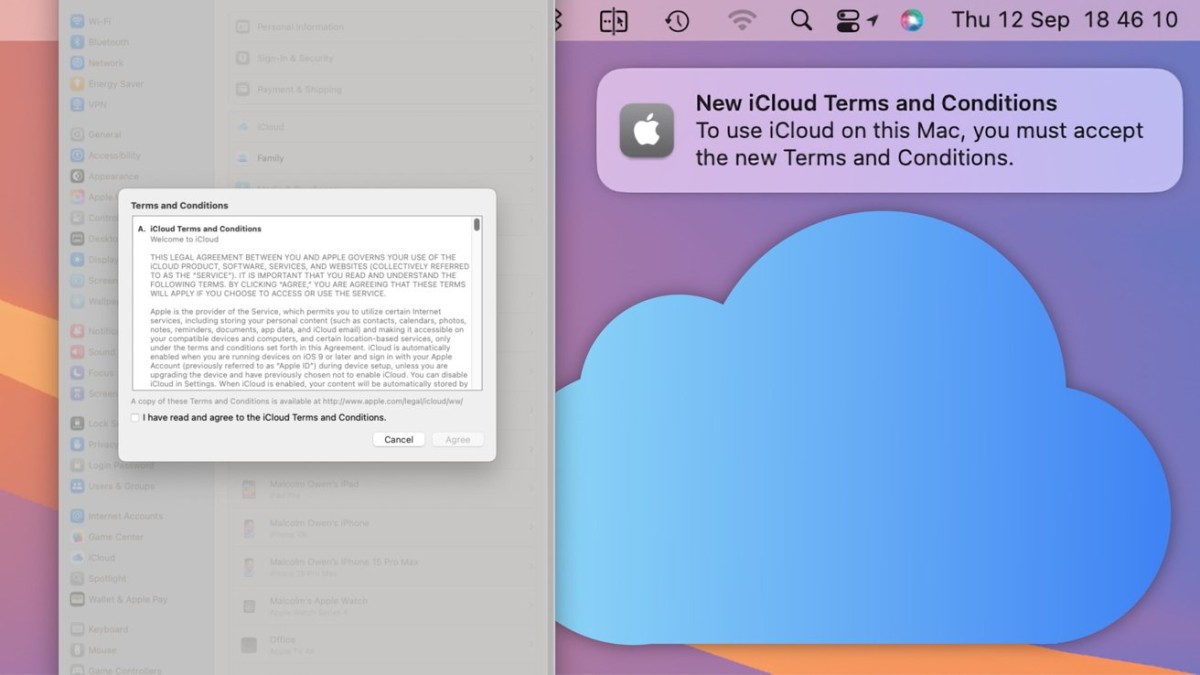
The new terms, set to officially take effect on September 16, 2024, have already begun showing up on user devices, prompting some surprise as they arrive earlier than expected.
Though it's common for Apple to update its terms for various services, the fact that these notifications are showing up four days ahead of the planned date has caught the attention of many users. Selecting the prompt in macOS settings brings up a pop-up containing the full text of the new iCloud Terms and Conditions. Interestingly, the bottom of the document reads, "Last revised: September 16, 2024"—a date still in the future. This suggests that Apple may have pushed the update early by mistake, as links provided within the terms lead to an error page on Apple's website that states, "The page you're looking for can't be found."
Nonetheless, the document outlines several key updates that bring both clarity and enhanced safety measures for users. Let’s take a deeper look at what’s changing.
Notable Changes in the September 16 iCloud Terms and Conditions
The updated terms introduce two main categories of change, impacting how users interact with their Apple ID (now referred to as "Apple Account") and reinforcing Apple's stance on illegal content and online safety, particularly regarding child protection.
1. Shift from "Apple ID" to "Apple Account"
One of the most obvious changes in the updated terms is the shift in terminology from "Apple ID" to "Apple Account." While the switch may seem minor, it represents a broader effort by Apple to standardize its language across its ecosystem of services, from the App Store to iCloud. This change reflects Apple's ongoing commitment to simplifying its user interface and legal documentation, aligning with similar updates that have been rolled out across their other software platforms.
Users will notice that references to "Apple ID" have been systematically replaced with "Apple Account" throughout the entire document, with no functional change to how the service works but creating consistency in how Apple’s ecosystem is described.
2. Strengthened Protection for Children: New Conduct Guidelines
A more substantial update can be found in Section Five of the revised terms, which is titled "Content and Your Conduct." This section outlines user responsibilities and acceptable behaviors while using iCloud services. Most of the list remains the same as previous versions, with familiar restrictions on activities like uploading unlawful content or infringing on intellectual property rights.
However, an important new clause has been added. The updated terms explicitly forbid users from engaging in any activities that could exploit, harm, or endanger children. This addition is designed to prevent users from using iCloud services to produce, upload, or share Child Sexual Abuse Material (CSAM), Child Sexual Exploitation Material (CSEM), or any other content that could harm children.
Here is the new wording: "Users must not engage in any activity that exploits, harms or threatens children in any way, including without limitation producing, sharing, uploading or storing Child Sexual Abuse Material (CSAM), Child Sexual Exploitation Material (CSEM) or any other content harmful to children."
This update mirrors Apple's broader global efforts to combat child exploitation online, which has been a significant focus for the company over the past several years. This new conduct guideline adds to Apple’s already stringent policies on harassment, unlawful content, and intellectual property infringement.
The Push for Enhanced Online Safety
Apple's move to strengthen these protections is in line with a growing emphasis across the tech industry on creating safer online environments, especially for minors. Though the company has previously faced some controversy regarding its plans to scan iCloud images for CSAM, it appears Apple is doubling down on its commitment to user safety through stricter legal language and clearer policies.
The addition of this clause comes as the global conversation around digital safety continues to evolve, particularly with the rise of AI and its potential to generate harmful content. By tightening its policies, Apple signals to both users and regulators that it remains committed to providing a secure, privacy-focused platform for everyone, especially vulnerable groups such as children.
What This Means for Mac Users
While the notification may have arrived earlier than expected, the changes to iCloud’s Terms and Conditions are not likely to affect how most users interact with the service on a day-to-day basis. The main points to take away from this update are:
-
Language Update: If you're used to seeing "Apple ID" in documents and terms, you'll now need to familiarize yourself with the new "Apple Account" terminology, though nothing functional has changed.
-
New Conduct Rules: Apple is becoming more explicit about what behaviors are unacceptable, especially when it comes to protecting children from harm.
Users who receive the early notification will need to agree to the terms in order to continue using iCloud services after September 16, 2024. If you see this notification pop up on your Mac before that date, don't be alarmed—Apple seems to have pushed the update a few days ahead of schedule.
Looking Ahead
This early release of iCloud’s updated terms may signal more changes to come in Apple’s ecosystem, especially as the company continues to refine its approach to privacy, security, and online safety. Users can expect that future updates will likely build on this foundation, focusing on user protection in a digital age where data security and ethical technology use are more important than ever.
As Apple tightens its policies, it also sets the stage for possible new features and services that adhere to these strict guidelines, all while reinforcing its commitment to keeping its users safe.
Stay tuned for further updates on this and other changes from Apple as they continue to refine their legal and service documentation in the coming months.