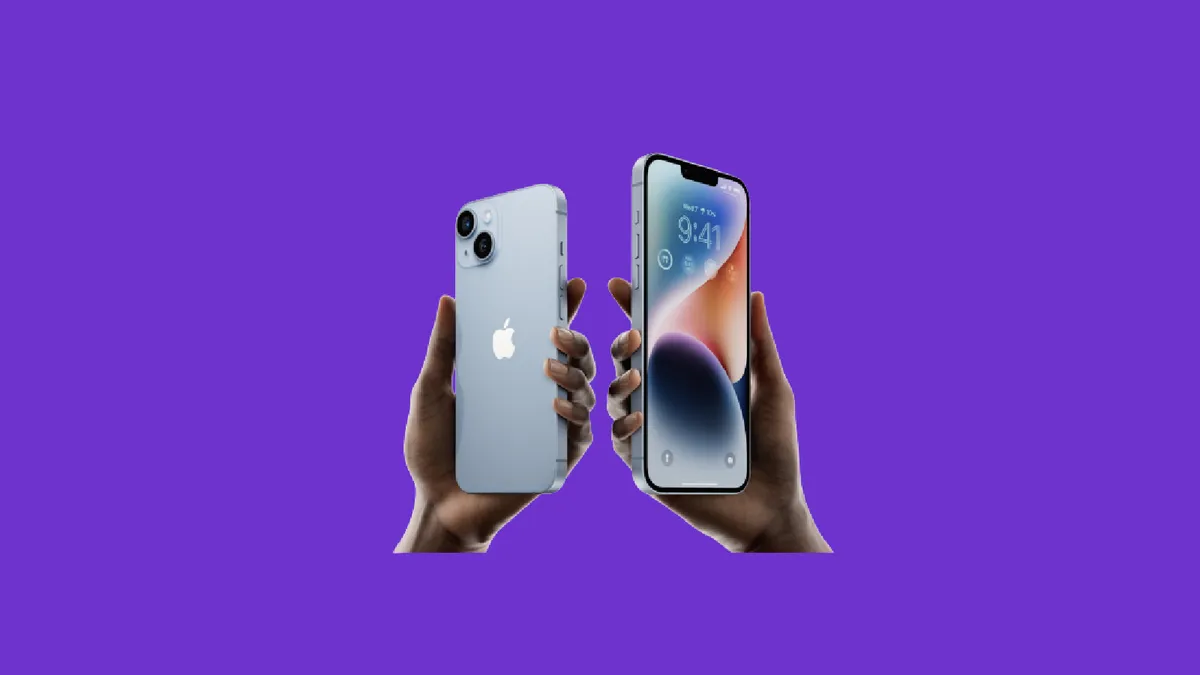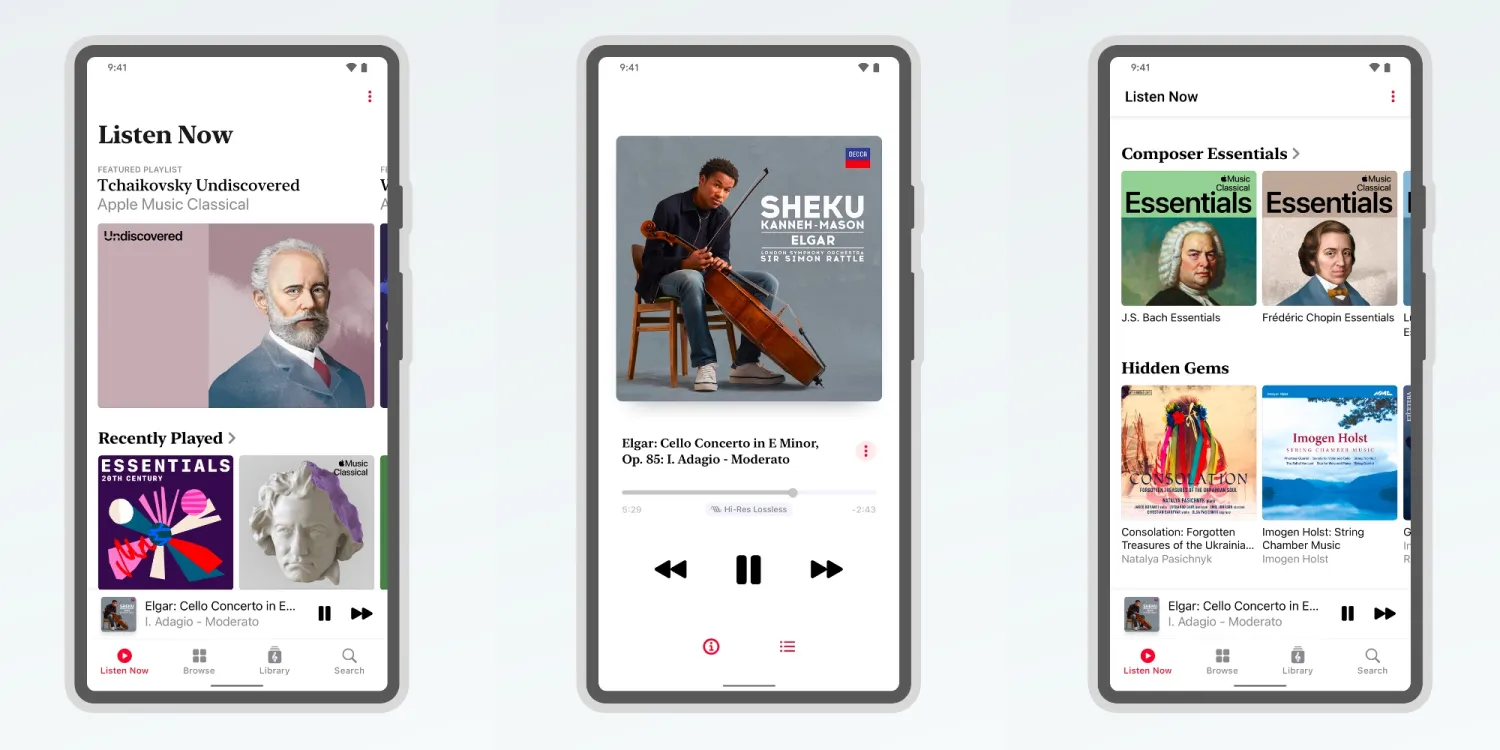
Apple Music and Apple Music Classical are two distinct apps on the iPhone. While both apps share a similar design, the key difference is how Apple Music Classical handles metadata. Classical also uses a serif font like Apple Books while the main app is sans serif.
The same differences now apply to Apple Music and Apple Music Classical for Android. Notably, Apple Music Classical has launched on Android before the genre-specific app has been optimized for iPad and available on Mac. Apple Music Classical is also not viewable with CarPlay.
Prioritizing Apple Music Classical for Android over Apple’s other platforms does make sense, though. The separate app is based on Apple’s acquisition of Primephonic, which was a standalone classical music subscription service, and the Android app went away with Aplpe’s purchase. That’s similar to how Apple Music for Android has served as a replacement for Beats Music for Android.
Apple Music for Android has also been maintained well for a non-Apple platform app. Notably, the app even has crossfade support, something Apple’s platforms only support on the Mac. And while Apple Music Classical is a separate app that’s downloaded through the App Store, it hasn’t been updated since its initial launch.
Perhaps now that Apple Music Classical for Android has shipped, the team behind the app can focus on enhancing the iPhone experience or bringing dedicated apps to more Apple platforms. Imagine a classical symphony on the Reality Pro headset.
Apple Music Classical for Android is available as a free download on the Google Play Store. Access is included with a standard Apple Music membership.