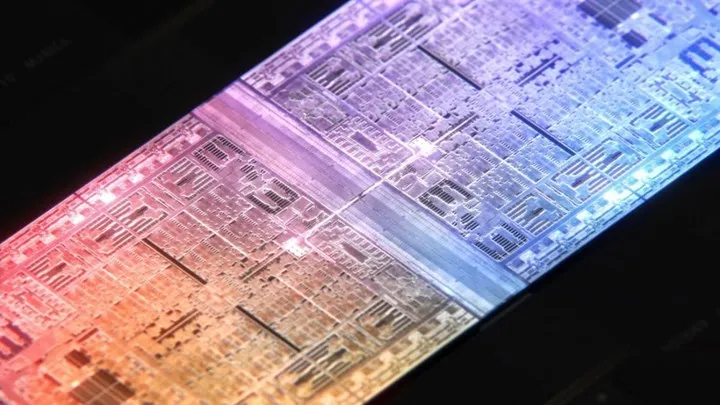
Recent reports suggest that several high-ranking Apple executives have secretly visited TSMC, the world's largest semiconductor manufacturer, to discuss the highly anticipated 2nm chip manufacturing process. This clandestine collaboration underscores the deepening partnership between TSMC and Apple, hinting at significant developments on the horizon.
Among the key figures involved in the discussions is Apple's Chief Operating Officer, Jeff Williams, who reportedly met with TSMC President Wei Zhejia. The primary focus of these discussions is believed to be Apple's desire to secure priority access to TSMC's advanced 2nm process for future chip production.
Apple's interest in TSMC's 2nm technology follows its successful utilization of TSMC's N3B (3nm) process in the A17 Pro chip powering the iPhone 15 Pro models. This strategic advantage enabled Apple to maintain technological leadership in the industry, extending beyond iPhones to include the M-series chips used in iPads and MacBooks.
Similarly, Apple seeks to maintain its competitive edge by securing priority access to TSMC's upcoming 2nm process. While no official announcement has been made, such an agreement could potentially bolster TSMC's revenue by an estimated $18.6 billion.
The specific application of the 2nm technology in Apple's products remains uncertain. However, speculation suggests that future iPhone models, possibly the iPhone 17 series, could feature the A19 Pro chip manufactured using TSMC's 2nm process. Previous rumors hinted at the adoption of TSMC's third-generation 3nm process for the A19 Pro, adding complexity to the forecast.
Beyond iPhones, Apple's interest in developing its ARM-based server processors for artificial intelligence applications further underscores the potential utility of TSMC's 2nm process. If Apple and TSMC reach an agreement, competitors like Qualcomm, MediaTek, AMD, and Nvidia may face delays in accessing this cutting-edge technology.
As Apple and TSMC explore new frontiers in semiconductor technology, their partnership could redefine the landscape of chip manufacturing and innovation, shaping the future of consumer electronics. Stay tuned for further developments as this collaboration unfolds.