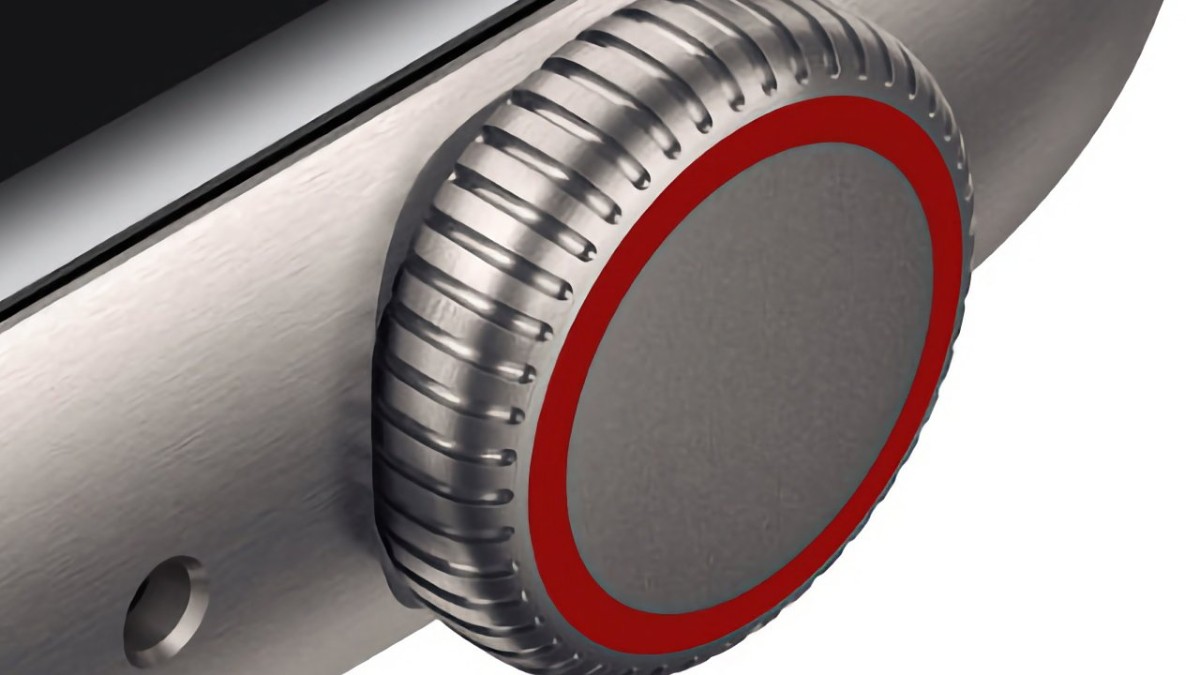
Apple is actively exploring enhancements to the Apple Watch's Digital Crown by incorporating technologies that detect touch or light. This initiative is evident from a new patent that outlines a method for integrating a light-sensitive surface alongside, or as an addition to, a physical crown. The proposed design suggests a crown protruding from the watch's side, designed with an imaging surface to capture light or touch interactions.
According to the patent titled "Crown for An Electronic Watch," the crown may incorporate features to direct light onto an imaging element, capturing images of an object in contact with it. This innovative approach may alter the traditional free-spinning mechanism of the crown, opting instead for a rotationally limited design that can detect finger motion across its surface.
The document elaborates on the potential for users to interact with the crown through gestures such as rotation or sliding a finger over the crown's surface. To accurately sense these motions, the crown might include a window through which the user's touch can be detected, either by physical contact or light variation.
The primary goal is to simulate the sensation of a freely rotating crown by analyzing the speed and direction of the user's finger movement. This could be achieved by examining changes in light or capturing images of the finger's surface, rather than utilizing biometric data for functionality.
Furthermore, the patent discusses the possibility of equipping the Digital Crown with a sensor capable of detecting light changes, which would convey information to the watch. It suggests a design where the crown consists of a light-transmissive element that can direct light from the surface to an image sensor, potentially utilizing internal reflection or reflective materials to enhance detection.
This innovative concept also considers ambient lighting conditions and the watch's ability to emit light to ensure consistent operation. The detailed descriptions and drawings in the patent reveal Apple's commitment to refining the Digital Crown's functionality, potentially transforming how users interact with future Apple Watch models through advanced touch and light sensing capabilities.
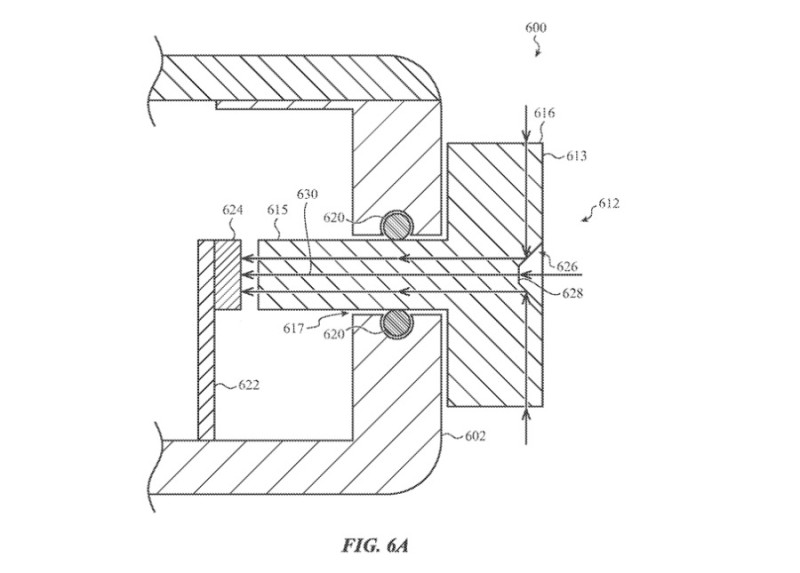
The patent application in question sheds light on potential advancements for the Digital Crown, an essential feature of the Apple Watch, emphasizing enhancements that could revolutionize its functionality and precision. This documentation suggests that while maintaining the recognizable aspect of the Digital Crown, Apple is investigating innovative methods to interpret rotational interactions into digital commands more efficiently.
A key aspect highlighted in the application is the possibility of achieving greater precision with the Digital Crown, potentially surpassing the capabilities of the current mechanical design. This increased precision could stem from the crown's enhanced ability to detect and interpret user interactions through advanced sensor technologies, rather than relying solely on mechanical movements. Such advancements might not only offer a more refined user experience but also reduce the susceptibility of the Digital Crown to wear and tear from continuous physical contact.
Moreover, the patent hints at a redesign that could allow for a more compact Digital Crown mechanism. By potentially shortening the crown's shaft, Apple could free up valuable internal space within the Apple Watch. This space could then be utilized for additional or more advanced components, contributing to the overall functionality and capabilities of the device.
Interestingly, since the submission of this patent, Apple has introduced the Digital Crown in another device, suggesting the broader applicability and significance of these enhancements beyond just the Apple Watch. The principles of precision and compactness outlined in the patent could indeed prove beneficial in other Apple products, such as the Apple Vision Pro, indicating a strategic direction for Apple's hardware design and user interface approach.
The patent is attributed to Apple inventor Michael J. Beyhs, whose role as a hardware engineer in Touch and Sensing Incubation at Apple in Germany underscores the company's ongoing efforts to innovate and refine user interaction technologies. Beyhs's involvement points to Apple's dedication to pushing the boundaries of what's possible with its devices, ensuring that even well-established features like the Digital Crown continue to evolve and meet the changing needs and expectations of users.