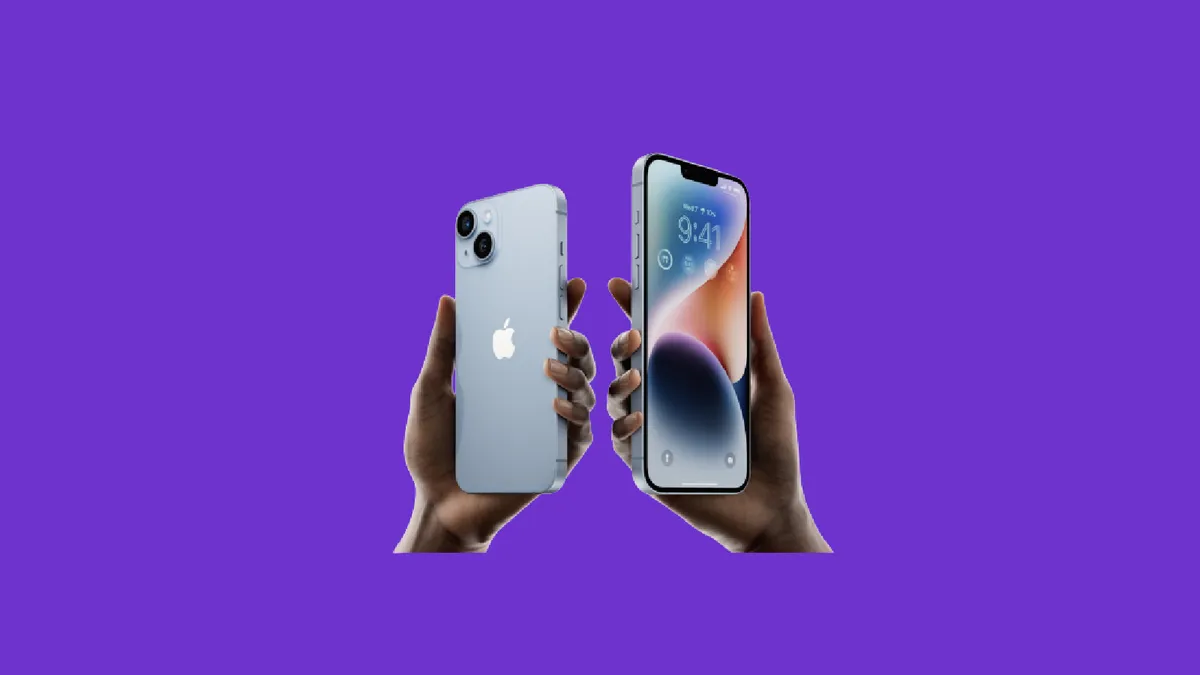
After Apple stock (AAPL) - Get Apple Inc. Report rallied on the back of optimism over the iPhone 14 cycle, expectations have started to moderate since late September. The most recent data point could spell trouble for the company’s financial performance and the stock, in my view.
Today, I talk about the App Store, one of Apple’s most important product or service subcategories, aside from the iPhone. Could it be showing signs of slowing consumer spending that has yet to show up in Apple’s financial statements?
App Store cools down
For context, the App Store is Apple’s ecosystem of applications for the iPhone, iPad, and other Apple products.
While the Cupertino company does not disclose financial data on it, it is well understood that the App Store is one of the most important pieces within the services portfolio. I estimate that App Store revenues account for around one-third of service segment sales.
Recently, Morgan Stanley published a report on App Store sales for September and fiscal Q4. According to analyst Erik Woodring, based on data from Sensor Tower:
The implications of App Store growth deceleration
I believe that Apple stock managed to capture substantially higher valuation multiples in the past 10 years (see chart below) as a result of three primary factors:
- Apple recovered swiftly in the fight for global smartphone dominance against Samsung and other Asian vendors, especially after the launch of the iPhone 7.
- CEO Tim Cook went all-in on share repurchases, starting in 2012.
- The company began to shift its business model to monetize on its growing installed base: away from lower-margin products, toward higher-margin services.
-
It is hard to tell which of the three factors above was the most important in sending AAPL’s P/E skyrocketing from 10x in 2013 to as high as 40x during the pandemic and around 24x today. But I suspect that services – and the App Store within this segment – played a crucial role.
Going back to late 2016, I recall the early conversations about what the services segment could become for Apple. In a now six-year-old article that I wrote on Seeking Alpha, I said that “services [would] determine Apple's success”. And they did, as Apple roughly doubled segment revenues between 2015 and 2018, then again from there to 2022.
Granted, comps are particularly hard in fiscal Q4 of 2022. This time last year, Apple managed to increase service sales by an impressive 26%. But if Morgan Stanley is right about growth dipping to the single digits (i.e., less than 10%), investors may start to feel a bit uneasy.
A decline in App Store sales might not only have an impact on a single subsegment. It could be one of the first signs of weaker consumer spending, a result of the toxic cocktail of high inflation and rising rates leading to what many believe will be a recession in 2023