The Watch Ultra, which goes on sale today, finds Apple addressing the problem head-on. The larger case (49mm to the Series 8’s 45), coupled with a slimming down of components like the haptic motor, offer more internal space for the battery. As a result, the sports-focused model effectively doubles the Series 8’s 18 hours to 36, in spite of a slightly larger screen and double the brightness (from 1,000 to 2,000 nits).
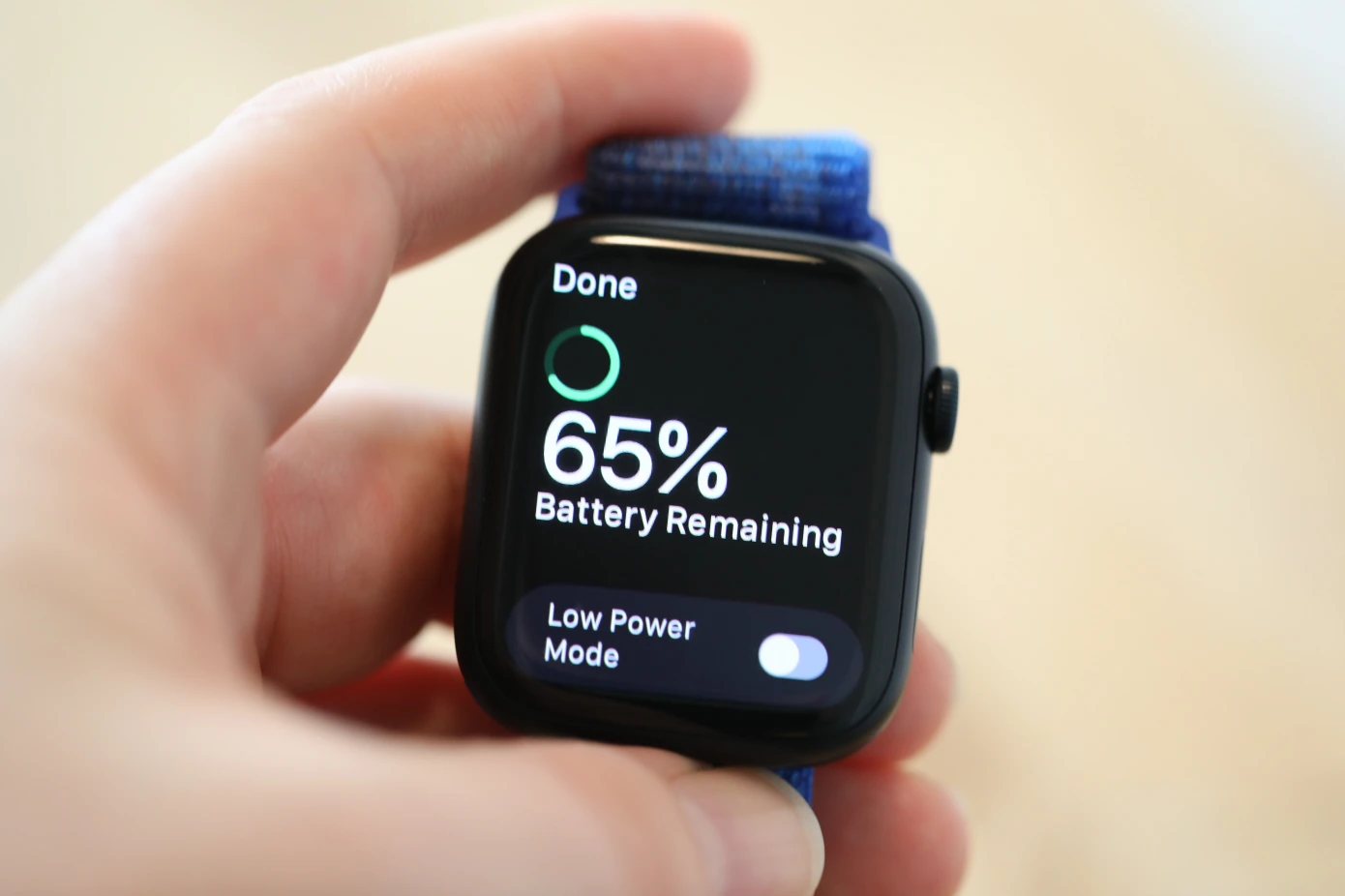
As for the rest of the line, Apple is once again looking to improve battery life without any meaningful hardware changes. Instead, it’s addressed the issue through a new Low Power mode rolling out with watchOS 9. Before this announcement, the Apple Watch had a Power Reserve Mode, a feature designed as a kind of last resort when your battery dips into the double digits. Once in that hibernative state, the device isn’t good for much other than telling time.
The new Low Power Mode is different. It’s about turning off power-hungry and, perhaps, unnecessary features to help you eke out more life — but for the most part, it’s still a fully functional smartwatch. During its “Far Out” event, Apple said the Low Power Mode can give you up to 36 hours of battery life on a full charge for the Apple Watch Series 8 and 60 hours of battery life on a full charge for the new Apple Watch Ultra.
When you turn on the Low Power Mode, the system disables the always-on display, background heart rate and blood oxygen measurements, workout reminders, auto workout detection and notifications for irregular heart rate rhythm, high heart rate and low heart rate. This mode also reduces Cellular pings to hourly and on-demand to preserve battery life.
The Low Power Mode also extends battery life on the Apple Watch Ultra by increasing GPS-based long duration of workouts like a triathlon beyond 12 hours in the regular power mode.